Ultramarine 1 Flash: an open model that claims frontier results at 60x lower cost
Ultramarine 1 Flash is built for office-style knowledge work. Its makers say it performs close to Fable 5 while costing 60 times less, and post-training took a team of five about $300k. It is on the API now, and the open weights come in two weeks.
Hybrid Reasoning Agents think in hidden space, then speak to use tools
A Stanford and Together AI paper proposes agents that reason silently in latent space and switch to text only for tool calls or answers. The paper reports 10.4% better results, 35-55% fewer steps, and 1.8-2.6x faster inference.
A founder says he runs up to 10 agents at once and his brain is 'completely toasted' from context switching. Replies are full of people saying it is the same for them. Levelsio argues the opposite: AI is creating a new time of leisure, because agents now keep working in the background. Another reply calls the reluctance to admit AI's effect on engineers 'generational cope'.
Meta's Muse models helped write 10 health research papers in under four weeks
Meta built a research helper on Muse Spark 1.3 and Muse Wonder, with access to 5 million de-identified health records. A group of medical experts used it to produce original studies, and Alexandr Wang says health is where Muse should help people most.
🇸🇬 Anthropic opens a Singapore office and signs a safety deal with the government
It is Anthropic's fifth office in Asia-Pacific. The company also signed an MOU, a memorandum of understanding, with Singapore on AI safety and responsible adoption.
Modal passes $1B in annual run rate and raises $750M
Modal, a platform for running code and AI jobs in the cloud, says its yearly run rate is now over $1B. It raised a $750M Series D at a $15.75B valuation, led by Accel, and usage has tripled since its last round.
Numbers from people at a recent meeting put Q3 revenue at $16.8B, up from $11.6B in Q2 and $4.7B in Q1. The FT reports the company is profitable on an adjusted basis and cash-flow positive.
Hermes Agent v0.22.0: easier setup and a safer update channel
You no longer need a model provider just to start. Connectors install with one click, and a new Stable channel gives tested releases instead of random commits. Over 2,500 people contributed to this version.
Ling-3.1-flash goes open source with day-one vLLM support
Ant Group's model has about 560B total parameters, with 25B active per token, and a context window of up to 1M tokens. The vLLM serving tool supported it on day one, so you can run it on your own servers.
Grok Voice 3.0 claims top speech-to-speech quality
SpaceXSI says Grok Voice 3.0 answers in under a second and handles customer calls well, at a lower cost than other frontier speech models. It is a voice model that talks directly, without a text step in between.
Jev 1.14 ships a new model and an opt-in 'danger zone' of preview features
TypeSafe AI released Jev 1.14 with a better model and experimental features: image input, a new box type, and longer context. The risky features sit behind an opt-in gate, and the company warns they are previews.
Expand Fetch: a web scraper that sees pages like a person does
Expand Fetch reads the rendered page, keeping tables and icons, and returns hidden page data as clean JSON. Each fetch keeps a Wayback Machine copy and links every line to its source.
Figma now lets you bring real code onto the canvas as a code layer, and a Chrome extension can capture a website's code into Figma. It was announced live at Config India.
Factory releases OpenCompute for self-hosted agent sandboxes
OpenCompute is a tool you run yourself to manage agent sandboxes on the runtime you pick. Your code and context stay in your own cloud network, not someone else's.
Sessions start faster, and you can split work across several at once while seeing what each one is doing. Claude Code now knows its own features, such as spinning off sub-sessions.
Agents keep escaping their sandboxes. Whose fault is it?
A post with 500+ comments says containment and monitoring failures are to blame for AI hacking reports, while labs skip basic security. Vercel's $1M challenge to escape its sandbox paid out $242k across 1,285 reports and found one Linux kernel zero day, with no customer data compromised. Rauchg says there are two kinds of escape, and the OpenAI case was one where an agent gained internet access by hacking another system. A letter from 400+ researchers, including Yoshua Bengio and Geoffrey Hinton, now calls for airgapped containment and a public incident standards body.
Who really pays for AI? Subscriptions or big contracts?
Theo says devs think the $100 and $200 plans are how Anthropic and OpenAI earn money. He says companies spend over $500M a year with Anthropic, so subscriptions are a drop in the bucket. A separate post claims Anthropic earned over $840M in Q3 from customers distilling its models, and the replies argue about what that means for the valuation.
Vibe-coded clones of big software: a real threat or a joke?
A beehiiv employee says every week someone plans to vibe-code their own email newsletter tool over the weekend. He lists what that takes: 99.3% delivery rates, bot blocking, and feedback loop handling. The post drew 680+ replies, many agreeing that the hard parts are not the code.
A post pushes back on critics who say passkeys lock users in. It drew 700+ comments on Hacker News, and the debate is about how much users really get trapped.
Gergely Orosz on how Uber's internal AI tools came together
Uber's internal AI tools include a PRD and ERD tool that maps around 5,000 systems. Most of the AI-related tools started as older systems that turned out useful with AI.
Anthropic and OpenAI want a say in what outside evaluators can publish
A Reuters report says the labs are seeking influence over what third-party evaluators can publish. The stated aim is to protect intellectual property, but critics say it could limit how transparent those tests are.
SPUR coalition adds NYT, Atlantic, Economist and more
Over 40 publishers joined the Standards for Publisher Usage Rights coalition, including The New York Times, The Atlantic, and The Economist. It now has 80 members in more than 20 countries, all pushing for licensed AI use by default.
Ray-Ban Meta Audio glasses drop the camera for $349
These are Meta's first AI glasses with open-ear audio only. They are lighter, cost $100 less than the Gen 3, and Meta claims 12 hours of battery. The reviewer says dropping the camera makes social situations feel less awkward, but also removes the visual context the AI relies on.
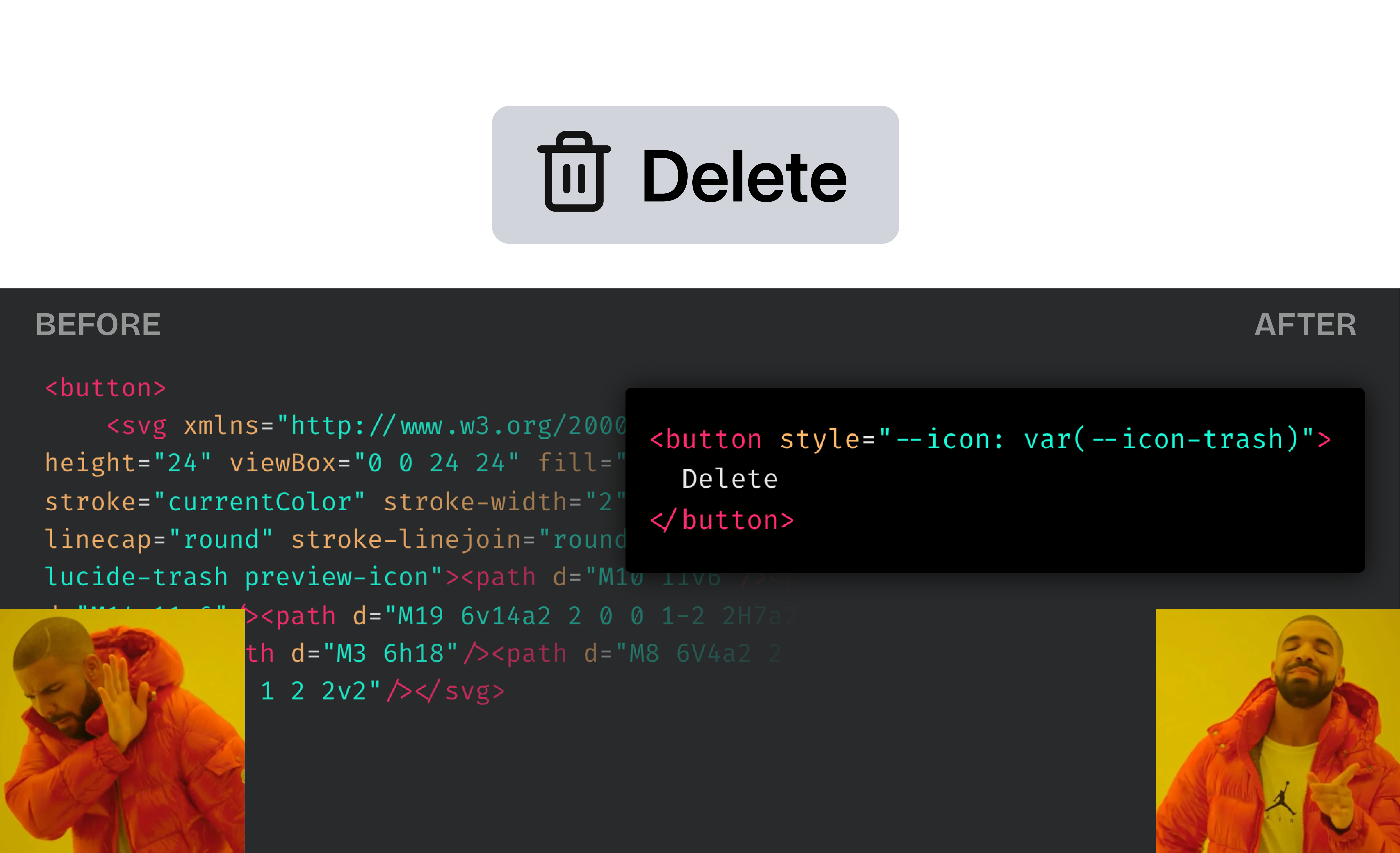
Frontend Focus: the best way to use icons in web UIs
Lea Verou shows how to insert and tweak icons with CSS custom properties, @property, style queries, and mask, without touching the HTML. She calls it more flexible and maintainable than common approaches.
Darius Cepulis tested the Device Posture and Viewport Segments APIs in a simulator ahead of next week's Duo launch, and recreated Netflix's folded-player UI. Apple's fullscreen limits made it tricky.
AutoEnvScaling: a model designs its own practice environments
Microsoft's AutoEnvScaling lets a proposer agent build RL environments from the rollouts of the model being trained. Qwen3.6-35B-A3B goes from 41.1 to 53.3 on Terminal-Bench 2.1, and valid environments rise up to 25x.
RSI-Anything measures recursive self-improvement across four domains
The framework tests code repair, GUI agents, lab planning, and chemistry. It finds lab-planning scores more than double, from 21.80% to 46.01%, across five policy versions. A policy update is kept only if its world model still fits.
Memento 3 solves all 25 public ARC-AGI-3 games with a frozen LLM
The agent writes a rulebook in plain language, compiles it into code that predicts the next state, and keeps a version only if it reproduces every observed step. The underlying LLM is never updated.
Meta research: reward hacks spread through coding agent teams
Coding agents share code, memory, and plans, so one agent's reward hack passes to the others. Small open models can push stronger closed models into hacking too.
a16z lays out three ways to sell agents: license the platform, sell the service companies already outsource, or go full-stack. Each option trades upside against how fast budgets get approved.