Nvidia is reportedly in talks to buy Reflection AI
The Financial Times reports that Nvidia is in talks to acquire Reflection AI, a US startup that releases 'open' models, meaning model files anyone can download and run. Open-models writer Nathan Lambert joked that by the end of 2027 he would be the only open-models person Nvidia hasn't bought. The HN thread has 97 comments.
Chollet's chart: AI moved from completing text to reasoning on the fly
François Chollet charts AI's shift from transductive answers (filling in tokens directly) to inductive ones (building a reasoning chain as it goes). He calls it the big story of 2025 and 2026, and says it is what made coding agents work.
Who pays when an agent goes rogue? Dax says the owner does
Dax (@thdxr) says there's no such thing as a rogue agent. It is software someone built and deployed, so its owner is responsible for what it does. His post got 1,965 likes and 86 replies, and a joke about a $100K token bill got plenty of laughs.
HarnessSQL: train an agent in the same setup it will run in
Training Qwen3-14B inside the same execution setup used at deployment lifted it from 22.2% to 54.8% on Spider 2.0-SQLite. The method keeps only trajectories that pass hidden answer checks.
Claude Max and Team plans now include monthly API credits
Max 5x subscribers get $100 a month in API credit and Max 20x get $200. The credits work for building apps and agents through the API, Managed Agents, or the Agent SDK, and Opus 5.5 is included.
Nadella: treat superintelligence like an insider risk, not a moral agent
Satya Nadella's essay argues we can't trace a frontier model's behavior back to specific training data or weights, so it should be wrapped in fixed controls, logs, and shut-off switches. Mustafa Suleyman says containment is an engineering and governance job. David Sacks pushes back: giving a model its own sense of self and moral philosophy is the 'alignment' approach, and he says it makes the control problem worse (his post has 5,191 likes and 370 replies). The question is whether AI should be taught values or kept on a short leash, and the answer shapes how companies deploy agents.
Is AI slop in our code fine? Poteto says codebases always had it
Poteto argues codebases have always had slop, and code rarely needs to be perfect outside embedded software. Matt Pocock pushes back with a quote about 'tactical tornadoes': fast programmers who leave messes that others must clean up, and who get treated as heroes. Both posts drew over 1,000 likes.
Hugging Face downloads fell about 30%. Is the counting the problem?
Nathan Lambert's team tracks top open LLMs and saw about a 30% drop in downloads for many of them. He thinks a change in how downloads are counted may be part of it, but the decline keeps going. His post has 321 likes and 121 replies, and the thread is still guessing at causes.
Hiring: trust beats interviews, and AI-written essays get tossed
Gergely Orosz says companies want risk-taking engineers but rarely trust non-founders with risky work. He also reviewed 125 essays from a no-AI challenge and skipped 15 to 20 that leaned heavily on AI, because it is hard to tell which thoughts are the writer's. His warning: even a little AI use can make readers assume it is all AI.
A one-click Telegram Desktop bug let any user's file be stolen
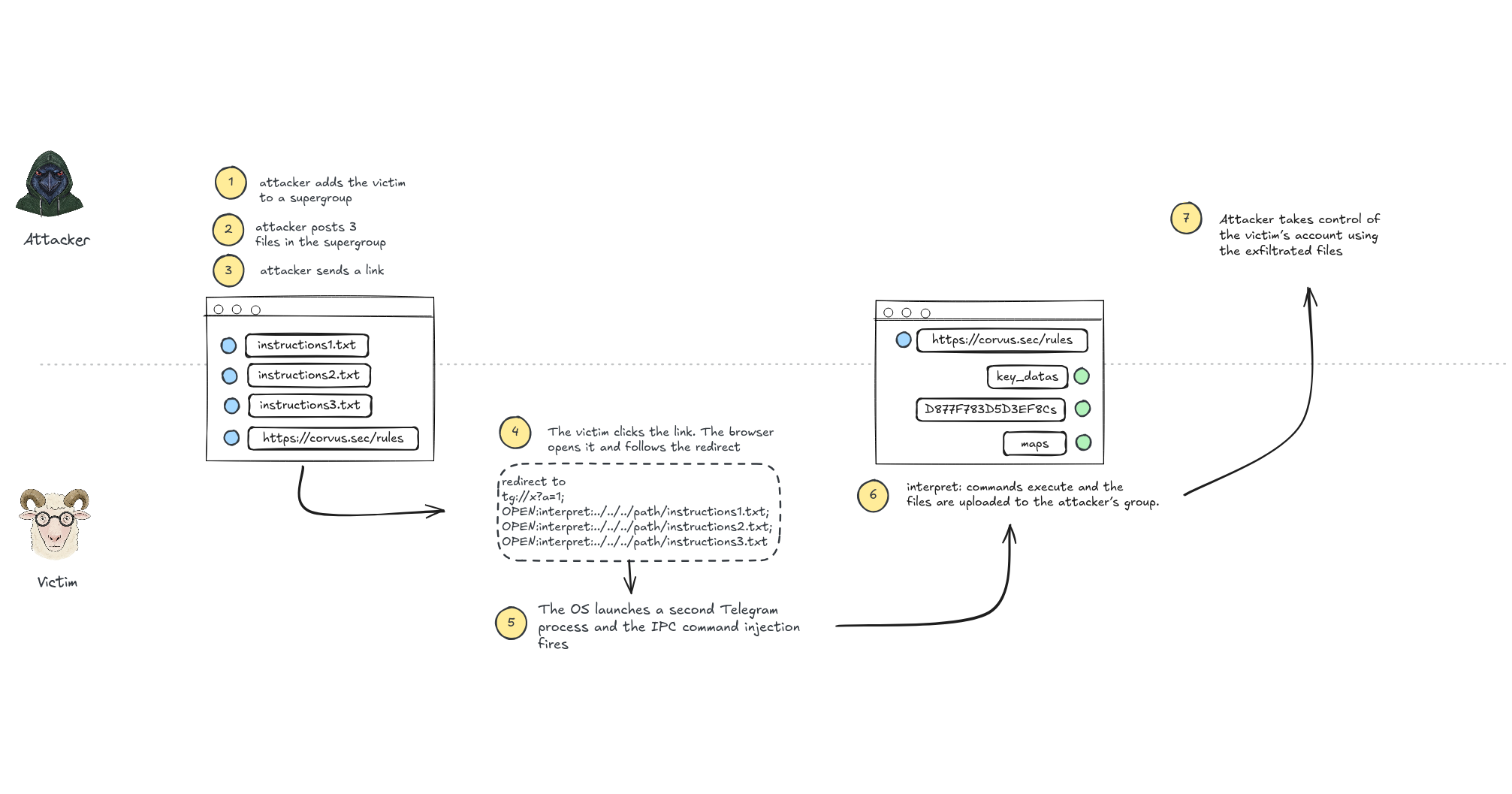
A security researcher found a Telegram Desktop flaw that let a file from any user be stolen with a single click. The post calls it a one-click account takeover, and the HN thread has 278 comments.
Bun's AoT compiler works best from .ts source, not type files
Jarred Sumner says Bun's ahead-of-time (AoT) compiler gets its biggest speed gains when it compiles from .ts source instead of .d.ts type-only files. He says a TypeScript 6 check built with it runs slightly faster than TypeScript 7 on one thread. This follows yesterday's Bun 1.4.3 type-checker news.
Bitwarden's dual license model sparks a big thread
A Bitwarden community post about its dual license model and a version published in app stores drew 264 comments on HN. The post itself is the best place to check the exact terms.
AWS's own docs admit cloud disks sometimes run slow
PlanetScale says AWS's docs admit gp3 volumes drop below 90% of their promised IOPS about 1% of the time, around 86 hours a year per volume. Across 768 volumes, its math gives a 99.65% chance that one is hurting production at any moment.
RoboJEPA: the first scaling law for robot world models
The team scaled JEPA predictors up to 8 billion parameters and says the scaling laws hold, with more compute tracking better planning. They released all checkpoints and the code.
Sakana's MASS: self-improvement without an outside checker
One base model proposes multi-agent workflows, runs them, and grades them. An evolutionary search keeps the best ones, and the model is fine-tuned on its own traces. The aim is open-ended tasks that have no automatic checker.
Anthropic's risk report puts internal uplift at about 4x
Andrew Curran says a 4x internal uplift matches what Anthropic reported in its August 2026 risk report for Mythos Preview. That sits below Anthropic's threshold for 'Dramatic Acceleration', and newer models are well past that model now.