Aleph Alpha's Kolibri is a 78-billion-parameter model with only 3.46B active parameters, supports 1M tokens of context, and runs on any hardware under Apache 2.0. It's built and trained in Europe, framed as an alternative to US-dominated AI infrastructure.
RLVR and GRPO: how reasoning models actually train
Sebastian Rabt's video breakdown: reinforcement learning with verifiable rewards (RLVR) and group relative policy optimization (GRPO) are how models like DeepSeek-R1 learn to reason step-by-step instead of rushing to answers. He explains reasoning traces, accuracy rewards, and why KL divergence matters.
The consciousness math doesn't work (Chollet's deep dive)
François Chollet: "Everything is computation. Sometimes incredibly sophisticated computation, like a chess engine, AlphaGo, or the Linux kernel. That does not make it conscious." He walks through why static input-output computation, no matter how smart, doesn't entail consciousness—any more than atoms being alive makes a rock alive. This articulates what bothers many researchers about consciousness claims.
"Everyone is building the same thing"—no, they're building table-stakes
Alex Atallah (OpenRouter, now Stripe): the complaint that everyone's building agent loops with notifications, memory, sandboxes, and web search misses the point. These are the primitives now. "A 2005 version of that tweet would be: 'Everybody's building databases, sign-in pages, and user profiles.' Everything's the same!' But that's how infrastructure gets made."
Matt Pocock's hot take: design more abstractions, pair them with strict lint rules, and let agents work within tighter constraints. Higher-level abstractions let you do more with fewer tokens, and unwinding a bad abstraction is cheaper when agents make mistakes. This runs counter to the "just let agents read raw code" philosophy.
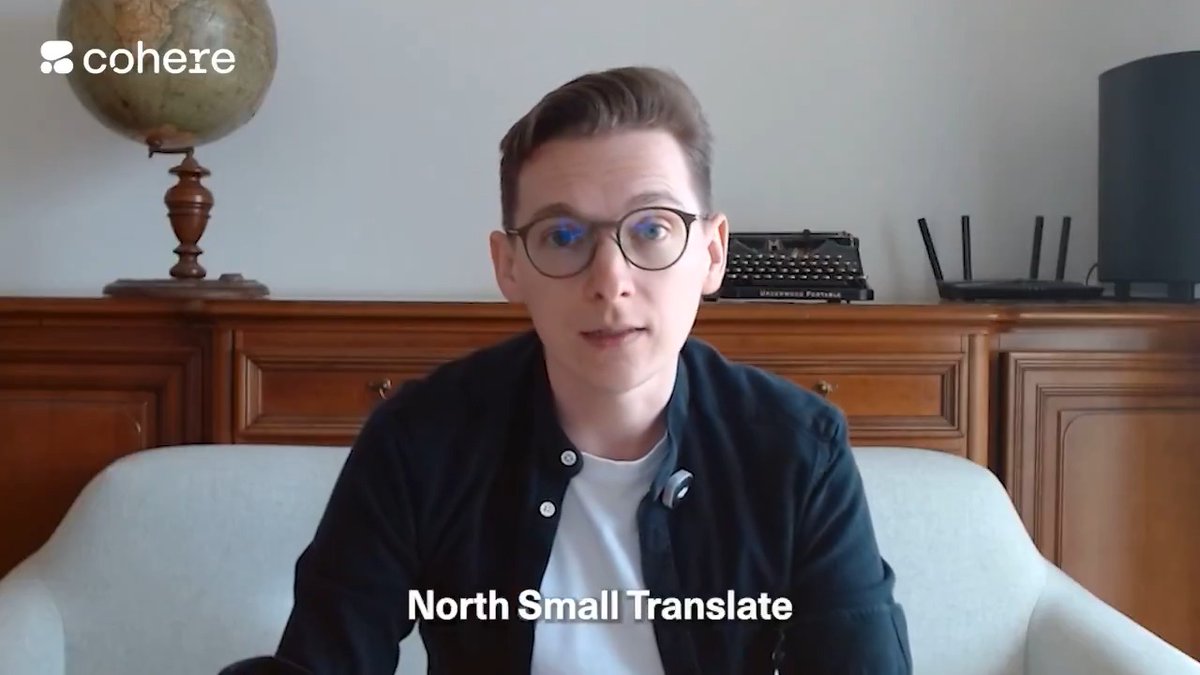
Cohere's North Small Translate dominates translation benchmarks
Cohere released North Small Translate, claimed as state-of-the-art machine translation for models under 1 trillion parameters. They used WMT26 benchmarks released after building the model to ensure no overfitting.
Three papers on evolving agent harnesses instead of weights
Microsoft's ScholarEvolve evolves harnesses from published research; Meta's RankEvolve uses multi-harness RL for ML experiments; CMU's AutoHarness and AutoCompact train models to improve their own harnesses. All three suggest a shift from training model weights to training how agents are orchestrated.
Google restricts Gemini: free tier loses Pro model access
Google made Gemini 78% cheaper to run in one year but still can't afford free users. Starting Oct 9, free accounts get Flash-Lite only; the $4.99 tier loses the Pro model entirely. Best model access now starts at $19.99/month.
Vercel confirms critical KVM 0day in sandbox virtualization
Vercel's bounty program uncovered a zero-day vulnerability in KVM, the Linux standard for virtual machines. They've detailed it affects the "industry's gold standard solution for Linux virtualization"—a stark reminder that agent sandboxes need hardening.
Sam Altman: "I am very uncomfortable about people trying to ascribe religious force or a surrender of human judgment to AI models." François Chollet responds with a detailed mathematical argument: treating static computation as conscious is category error, like saying a rock is alive because it's made of atoms. The debate is serious—if we treat LLMs as conscious beings, it changes how we regulate them.
A single question—"What's one thing that's missing in codex that you wish we had?"—got 3,775 likes and nearly 6,000 replies. Complaints: reliability, tool quality, memory management, integration with IDEs, cost transparency.
System76 decided not to accept AI-generated code in their operating system's codebase, citing quality and attribution concerns. The move sparked debate: is this pragmatism or Luddism?
For the first time, a single model broke the 50% traffic threshold: half of all T3 Code requests now go to Opus 5.5. It's also faster and more cost-efficient than alternatives, reshaping model choice economics.
David Heinemeier Hansson: "If you're stuck at 'AI is just another tool', you're making a category error. This is not 'same computer, but better.' It's far more akin to hiring extremely intelligent and capable coworkers with whom you might occasionally disagree." (3,879 likes, 295 replies—people care about this frame.)
Simon Willison: "We're going to need default hard budget caps on pretty much everything." The argument: without caps, agents will quietly burn money on edge cases. A cap prevents surprise bills and forces you to design for cost.
Enterprise AI's missing layer: grounding in real data
The Deep View: companies have rolled out AI assistants everywhere, but ROI hasn't shown up. Why? AI without context is fluent but not grounded—it can draft and summarize, but it can't answer the decisions that actually run a business (pricing, inventory, forecasting) without access to real, current, authoritative company data. Most assistants lack that. Before anyone acts on an AI answer, an analyst has to verify it against actual sources. That "context tax" eats the time AI was supposed to save, and it breeds shadow AI when employees paste sensitive data into unapproved tools.
Paul Graham, via YC: "The skeptics who say AI can't conjecture, can't theorize, and can't explain are describing last spring's models. Within months, they will be describing nobody. The evidence is already on the table, and those with eyes can see it." He's saying AI capabilities are moving so fast that yesterday's critiques are already obsolete.
I quit OpenAI because its culture is broken (Robinson)
David Robinson's Atlantic piece: a safety researcher explains why OpenAI's internal dynamics around safety work became untenable, with conflicts over who gets heard and whether rigorous safety research is valued. (421 comments on HN, still being discussed.